




Five Elements & Herbal Beads
Short answer: The Five Elements, or wuxing, are best understood as a changing classification and relationship framework built around Water, Fire, Wood, Metal, and Earth. Early texts describe characteristic actions and functions; later traditions developed broader correspondences and generating or controlling relationships. A bracelet can refer to this symbolism, but its colors or materials cannot prove health, luck, protection, energy balance, or a change in fate.
This guide separates early textual anchors, later interpretive systems, and modern jewelry language. It was prepared by Colina Chen for Kenlina Haven Inc using a source-layer method: primary text first, modern scholarly context second, and product claims kept separate from both.


What Does Wuxing Mean?
The Chinese term wuxing is often translated as Five Elements, Five Phases, or Five Agents. No English label captures every historical use. The important caution is that the framework is not simply an ancient version of the modern chemical elements.
An early textual anchor appears in the Hong Fan chapter of the Shang Shu. Its descriptions emphasize characteristic actions: water moistens and moves downward, fire burns and moves upward, wood can bend and straighten, metal can be worked and changed, and earth supports cultivation and harvest.1 That passage matters, but one chapter cannot establish every later correspondence or practice.
How Later Systems Expanded the Framework
Across later periods, Five Elements classifications were connected with seasons, directions, colors, sounds, tastes, bodily systems, calendar terms, and other categories. Modern scholars sometimes describe this style of organization as correlative cosmology.2 The label is a modern analytical term, not one universal name used by every historical participant.
Correspondence tables differ by source, era, and school. A modern chart should therefore identify where its mapping came from instead of presenting every color, direction, organ, or object as timeless and unanimous.
Generating and Controlling Relationships
The familiar generating cycle and controlling cycle are relational models. "Generating" can indicate support, transformation, or sequence; "controlling" can indicate restraint or regulation. They are not automatic physical laws, and a diagram cannot prove that a consumer object will change a person's body, finances, relationships, or future.
When a Kenlina page uses Five Elements terminology, it describes cultural symbolism, design wording, or an attributed product name. It does not diagnose what a person "lacks," prescribe a corrective color or material, or claim that buying an object will rebalance the elements.

How to Read Five Elements Jewelry Language
- Identify the layer. Is the statement from an early text, a later interpretive system, or modern product naming?
- Ask for the mapping source. Color and material associations should not appear as universal facts without a source.
- Separate symbolism from specification. Symbolic "Wood" does not identify a botanical wood species; symbolic "Metal" does not identify an alloy.
- Check the actual product. Use the listing for current materials wording, variants, size, price, care, and availability.
- Reject guaranteed outcomes. Cultural meaning is not evidence of healing, luck, wealth, protection, longevity, or emotional change.
For product-fact questions, use Kenlina's Natural Bead Bracelet Buying Guide and Materials and Scent Glossary. For aromatic-bead terminology, see the Herbal Incense Beads Guide.
What This Cultural Framework Cannot Prove
Five Elements symbolism cannot prove that a bracelet treats anxiety or insomnia, regulates energy, supplies a missing element, improves health, attracts wealth, protects a wearer, increases longevity, changes destiny, or guarantees a spiritual outcome. It also cannot prove a product's material, species, origin, formula, age, authenticity, or durability.
Frequently Asked Questions
Are the Five Elements the same as chemical elements?
No. Wuxing is a historical classification and relationship framework. It is not the periodic table.
Does every tradition use the same color and direction chart?
No. Correspondences developed across different texts and systems. A page should identify its source and historical layer.
Can a bracelet balance my Five Elements?
Kenlina does not make that claim. A bracelet may carry symbolic design language, but it cannot prove a personal diagnosis or guaranteed change.
Does a symbolic Wood label prove the bracelet is made from a specific wood?
No. Material identity requires product-specific evidence. Symbolism and physical specification are separate.
How should I choose a bracelet with Five Elements styling?
Choose by verified product facts, fit, appearance, scent preference, care tolerance, budget, and availability. Treat symbolism as an optional cultural or aesthetic layer.
Sources and Method
- Shang Shu, Hong Fan, Chinese Text Project edition; accessed 2026-08-16. Used as an early textual anchor, not as proof of every later system.
- Stanford Encyclopedia of Philosophy, Religious Daoism; accessed 2026-08-16. Used for modern scholarly context on correlative frameworks.
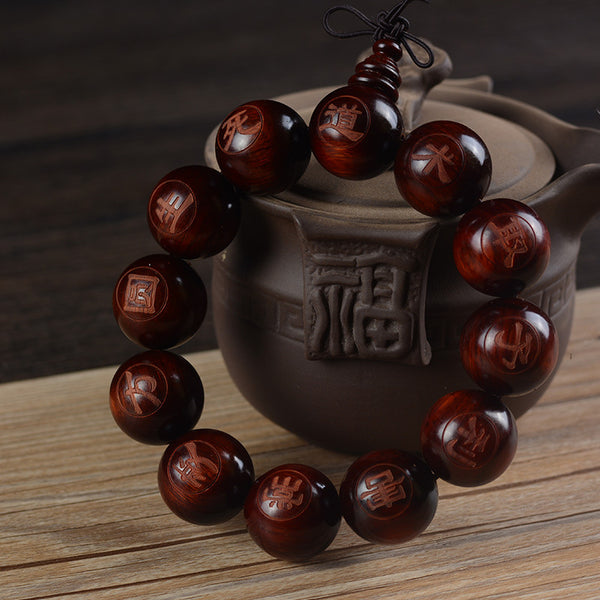
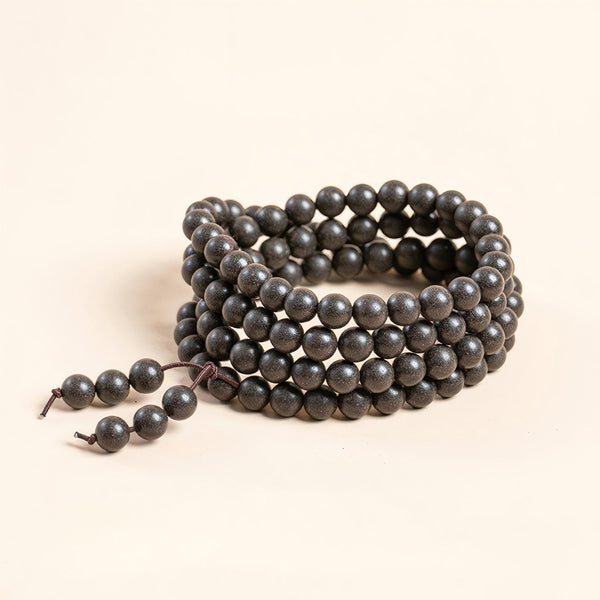
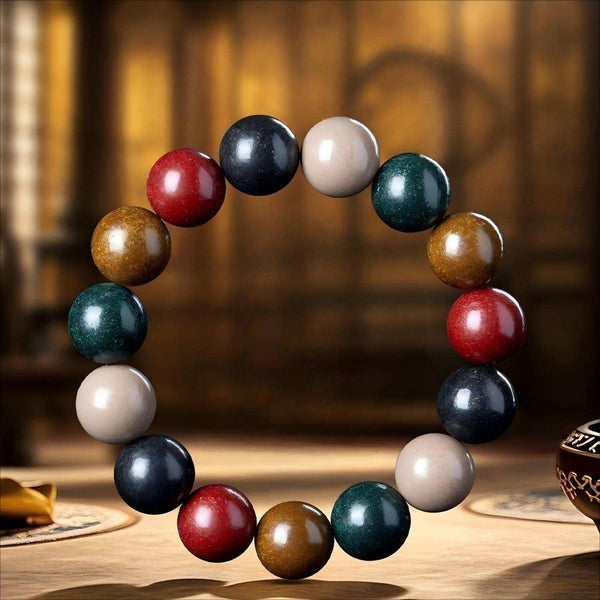
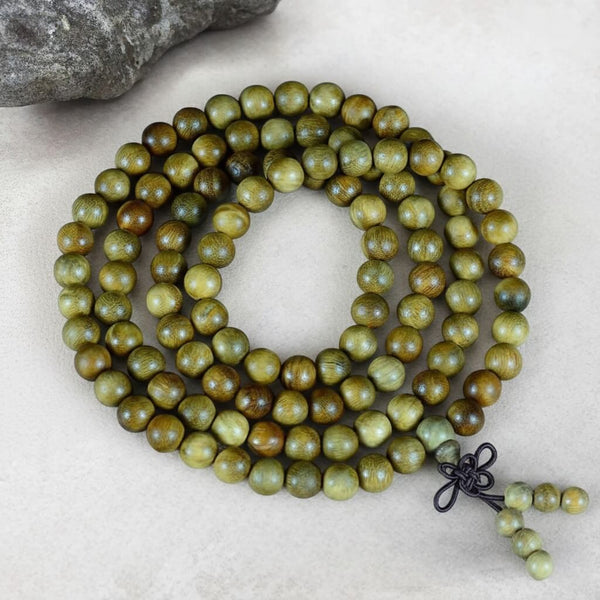
Editorial disclosure: The images on this page are generated educational illustrations. They are not Kenlina products, historical artifacts, experiments, or evidence of an outcome.