







Intro

Here are soft, grounding practices you can use at any moment-
before meetings, during stressful conversations, or even after a long day.

Ground Yourself Through Touch
Your body calms through sensation faster than through logic.
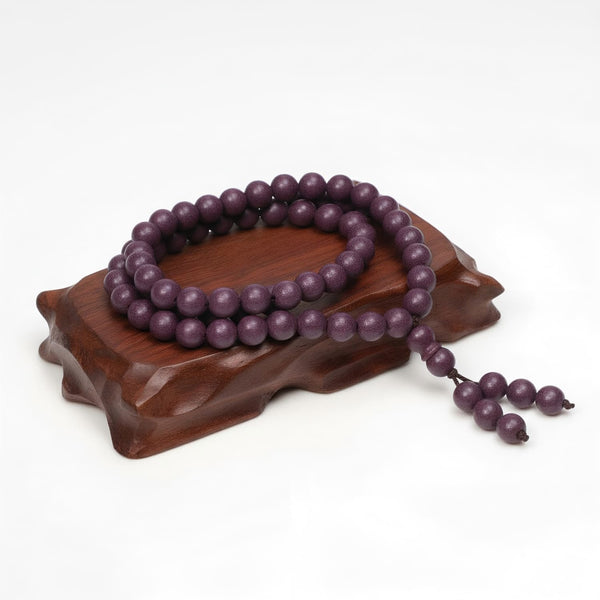
Hold your bracelet gently.
Let your thumb move across each bead.
Inhale as your finger touches one bead, exhale on the next.
If your bracelet carries the subtle aroma of herbal incense, let the scent guide your breath.
This reminds your nervous system:
"You're here. You're safe. You can soften."
Try the Pre-Meeting Breath Ritual
Before you unmute your mic:
Breathe in for 4
Hold for 2
Exhale for 6
Let your exhale be longer-
that's what signals safety to your brain.
Shift From Self-Focus to Task-Focus
Instead of thinking:
"What will they think of me?"
Try:
"What am I here to contribute?"
Being present ≠ being perfect.
Rewrite Your Inner Dialogue
When you catch harsh thoughts:
"I'll embarrass myself."
→ "I can take my time."
"They'll judge me."
→ "Everyone is too busy worrying about themselves."
"I don't belong."
→ "I'm learning. That is enough."
Use Micro-Exposure
You don't have to jump into big social moments.
Start tiny:
- Ask one simple question
- Speak once in a meeting
- Keep your camera on for two minutes
- Share one idea in chat
Small courage is still courage.
Create a Post-Meeting Reset Ritual
After a stressful interaction:
- Close your eyes
- Take one long breath
- Hold your bracelet
- Whisper to yourself: "It's done. I'm safe."
Let your body release the tension it held for you.
Sensory Anchors Throughout the Workday
When anxiety rises:
- Smell a grounding scent
- Warm your hands
- Touch a bead
- Feel your feet on the ground
Your senses bring you back to yourself.
Your Pace is Enough
You don't need to speak like the loudest voice.
You don't need to show up like everyone else.
Your presence-your way-is enough.
For Managers: How to Create a Calming Workplace in 2026
A supportive employer can change everything.
1. Encourage open, judgment-free conversation
Normalize talking about anxiety.
2. Reduce camera-on requirements
Let employees choose when they feel comfortable.
3. Provide clear expectations
Uncertainty heightens anxiety.
4. Create quiet zones or serene break spaces
Rest resets creativity.
5. Support emotional health
Kenlina donates 5% of every sale to ADAA-the global movement caring for anxiety & depression. Emotional well-being is culture, not a perk.
When to Seek Additional Support
If anxiety becomes constant or overwhelming,
therapy, CBT, online counseling, or medication can provide relief.
Reaching out is not failure.
It's wisdom.
Frequently Asked Questions
Q1: Why do I panic before speaking?
A: Your nervous system confuses attention with danger.
Q2: Can I work successfully with social anxiety?
A: Absolutely. Many people thrive with supportive routines.
Q3: Is camera anxiety real?
A: Yes-being visibly observed triggers a biological stress response.
Q4: How do I speak up when I'm scared?
A: Start small. One sentence is enough.
A Soft Ending: You Belong in Every Room You Enter
Your voice matters.
Your pace matters.
Your presence matters.
You don't need to be fearless to show up.
You only need to breathe-and take one gentle step at a time.
Breathe deeper. Find stillness. Carry peace.
FAQ
Q1. What is a quick ritual before a work conversation?
A: Before speaking, exhale slowly, touch one grounding cue, and choose one useful contribution instead of monitoring every reaction.
Q2. Can social anxiety at work improve with practice?
A: Small repeated practices can support confidence over time, especially when paired with realistic expectations and kind self-talk.
Q3. When is extra support important?
A: If social anxiety limits daily life or work participation, professional support can be an important part of care.