







Key Takeaways
- Perfectionism is one of the strongest psychological drivers of anxiety in high achievers.
- A large-scale meta-analysis shows perfectionism has significantly increased in modern professionals.
- Chronic perfectionism activates the sympathetic nervous system, elevating cortisol and impairing strategic thinking.
- Sustainable stress management requires shifting from fear-driven perfectionism to values-driven excellence.
You're lying in bed.

The room is quiet.
But your mind is replaying that afternoon meeting - every sentence, every micro-expression, every decision.
This isn't just ambition.
This is your nervous system refusing to power down.
For many high achievers, perfectionism does not end when the workday ends. It becomes a 24-hour operating system.
Let's explore the scientific link between perfectionism and anxiety, and why high performers struggle to disengage.

What Perfectionism Really is?
Perfectionism is often mistaken for discipline or high standards.
In reality, it is fear disguised as excellence.
Fear of:
- Failure
- Criticism
- Reputational damage
- Losing status
- Being exposed as inadequate
Healthy ambition is growth-driven.
Perfectionism is threat-driven.
And when the brain detects threat, it activates anxiety.
A meta-analysis published in the Psychological Bulletin, examining over 40,000 individuals, found that perfectionism has increased by 33% since 1989, directly correlating with a significant rise in clinically diagnosed anxiety among high-achieving professionals.
In other words:
Modern success culture is amplifying perfectionistic tendencies - and anxiety is rising with it.
The Neuroscience: Why Perfectionism Feels Urgent?
When mistakes are interpreted as danger, the brain activates the sympathetic nervous system - your fight-or-flight response.
This triggers:
- Elevated cortisol
- Increased heart rate
- Muscle tension
- Hypervigilance
- Racing thoughts
Over time, repeated activation strengthens neural pathways associated with threat detection.
Small errors begin to feel catastrophic.
Minor feedback feels destabilizing.
This is why many high achievers experience work-related insomnia and chronic overthinking - the nervous system does not differentiate between a physical threat and a performance threat.
The Yerkes-Dodson Law: When Pressure Backfires
Psychology has long studied the relationship between stress and performance.
According to the Yerkes-Dodson Law, performance improves with moderate levels of stress - but only up to a point.
Beyond that peak, performance declines sharply.
Perfectionism pushes high achievers beyond the optimal zone into a "strain zone."
In this zone:
- Cognitive flexibility drops
- Emotional reactivity increases
- Strategic clarity narrows
- Anxiety intensifies
The very pressure meant to protect performance begins to erode it.
Why Finance, Law, and Executive Roles Amplify Perfectionism
Perfectionism thrives in environments where performance equals survival.
Finance
- Constant metrics and quarterly targets
- Competitive compensation models
- Market volatility
Law
- Zero-error tolerance
- Reputation-based authority
- High adversarial scrutiny
Executive Leadership
- Responsibility for large teams
- Investor expectations
- Public visibility
According to research highlighted in the Harvard Business Review, high achievers are often described as "insecure overachievers" - individuals whose extraordinary performance is fueled by a fear of inadequacy.
This chronic hyper-vigilance leads to a 20% higher risk of burnout compared to their peers.
Externally rewarded.
Internally destabilizing.
Perfectionism becomes both asset and liability.
Excellence vs. Perfectionism
| Trait | Healthy Excellence | Anxiety-Driven Perfectionism |
| Motivation | Growth & mastery | Fear of failure |
| Mistakes | Feedback | Personal threat |
| Self-worth | Stable | Conditional |
| Rest | Necessary | Unsafe |
| Outcome | Sustainable performance | Burnout |
Excellence builds resilience.
Perfectionism depletes it.
Signs Your Perfectionism is Fueling Anxiety
You may be experiencing anxiety-driven perfectionism if:
- You replay small mistakes repeatedly.
- You struggle to delegate.
- You feel uneasy when not optimizing something.
- You experience work-related insomnia.
- You notice signs of high-functioning burnout.
👉 See our guide on Signs of Success Anxiety - You find it nearly impossible to mentally disengage.
👉 Explore Why Successful People Struggle with Anxiety
Perfectionism frequently overlaps with high-functioning anxiety, creating a loop that is difficult to exit.
The Hidden Cost of Never Turning Off
The American Psychological Association (APA) notes that chronic stress induced by perfectionism can lead to decision fatigue.
Research indicates that elevated cortisol levels impair the prefrontal cortex - the part of the brain responsible for strategic thinking, impulse control, and cognitive flexibility.
When cortisol remains high:
- Decision quality declines
- Emotional reactivity increases
- Long-term planning weakens
- Creativity narrows
Ironically, the pursuit of flawless performance begins undermining executive function itself.
Chronic perfectionism can lead to:
- Persistent anxiety
- Emotional exhaustion
- Reduced innovation
- High-functioning burnout
The system designed to optimize performance starts degrading it.
How to Shift From Perfectionism to Sustainable Excellence?
The goal is not lower standards.
It is removing fear as the fuel source.
1. Identify the Fear Beneath the Standard
Ask:
"If this goes imperfectly, what am I actually afraid will happen?"
Often the fear is about identity - not outcome.
Awareness weakens threat activation.
2. Practice Strategic Imperfection
Instead of aiming for 100% in every situation, introduce Strategic Imperfection.
Choose low-risk tasks and intentionally stop at 90%.
Observe:
- Does catastrophe occur?
- Does your value diminish?
- Does performance truly collapse?
This retrains the nervous system away from hyper-vigilance.
3. Implement Structured Shutdown Rituals
High achievers require ritualized closure.
At the end of your workday:
- Write tomorrow's top three priorities.
- Close all work tabs.
- Physically leave your workspace.
Without closure, the stress response remains active.
4. Regulate the Body First
Perfectionism lives in physiology.
Daily tools that calm sympathetic activation include:
- 4-6 breathing (longer exhales)
- Progressive muscle relaxation
- Device-free walks
- Slow tactile grounding
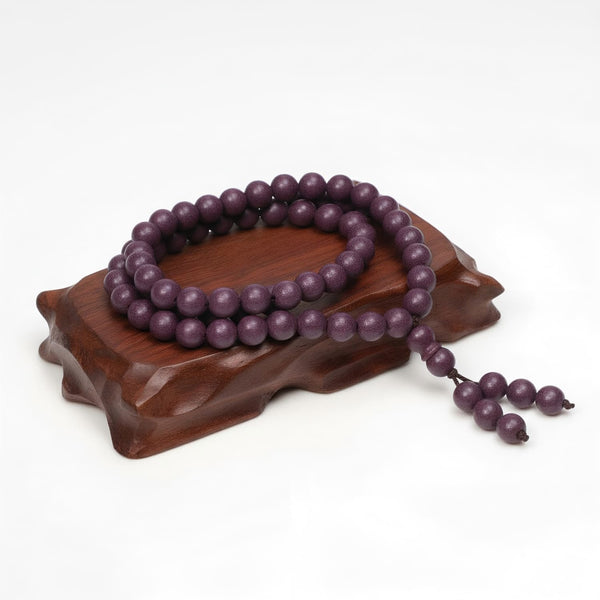
The brain responds strongly to tactile cues.
Focusing on texture - wood, stone, fabric - can interrupt rumination and signal safety to the nervous system.
Calm often begins in the body before it reaches the mind.
5. Expand Identity Beyond Achievement
If identity depends solely on performance, anxiety remains close.
Reconnect with traits like:
- Integrity
- Compassion
- Stability
- Curiosity
- Presence
If you haven't yet explored the identity trap of achievement, see our article on The Paradox of Success.
Final Thought
Perfectionism and anxiety are deeply intertwined.
For high achievers, perfectionism often begins as discipline - and evolves into a nervous system that never rests.
The real strength is not pushing harder.
It is knowing when to soften.
Excellence does not require anxiety.
Turning off does not mean falling behind.
It means protecting the clarity that made you exceptional.
FAQs
Q1: Is perfectionism always unhealthy?
A: No. Growth-driven excellence is healthy. Fear-driven perfectionism increases anxiety risk.
Q2: Can perfectionism increase cortisol?
A: Yes. Chronic performance pressure activates the stress response and elevates cortisol levels.
Q3: Why do high achievers struggle to relax?
A: Because their nervous system associates rest with vulnerability.
Q4: How do tactile grounding practices help?
A: Physical sensory focus signals safety to the nervous system, reducing rumination and stress activation.
FAQ
Q1. Why can perfectionism feel hard to turn off?
A: Perfectionism often links attention, identity, and safety to flawless output, so the mind keeps scanning even after work ends.
Q2. What is a calmer perfectionism ritual?
A: A calmer ritual gives the body a repeatable cue to pause, exhale, and separate tomorrow's work from tonight's rest.
Q3. Can a bracelet help with perfectionism?
A: A bracelet cannot solve perfectionism, but it can act as a tactile reminder to soften the pace and return to the next steady breath.