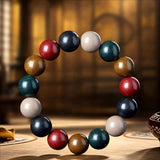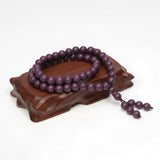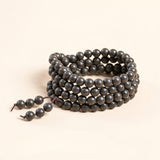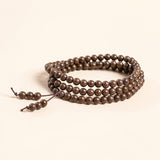


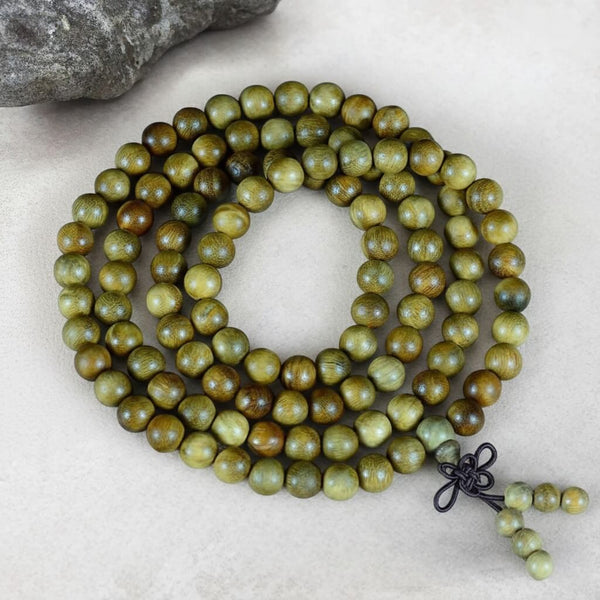
Short answer: The practical difference in meditation jewelry vs ordinary jewelry is usually the stated design purpose, structure, and way the owner chooses to use it. Either category can be decorative or meaningful. A label such as meditation, mindful, mala, or prayer does not automatically prove religious authority, healing, calm, focus, superior materials, or a universal practice.
Use the Bracelet Care and Materials Guide for physical care. Compare the exact item rather than relying on its category name.

Meditation Jewelry vs Ordinary Jewelry
| Question | Meditation jewelry may state | Ordinary jewelry may state |
|---|---|---|
| Intended use | Counting, chosen reminders, prayer, or practice context | Adornment, styling, occasion, or personal expression |
| Structure | Repeated beads, a focal bead, marker, tassel, or documented count | Any decorative construction, including the same physical forms |
| Meaning | Tradition-specific or personally assigned, when accurately explained | Personal, cultural, aesthetic, or occasion-based |
| Evidence | Requires the same truthful product facts as any jewelry | Requires the same truthful product facts as any jewelry |
| Outcome | No automatic health, emotional, spiritual, or performance result | No automatic health, emotional, spiritual, or performance result |
Intended Use Is Not a Material Test
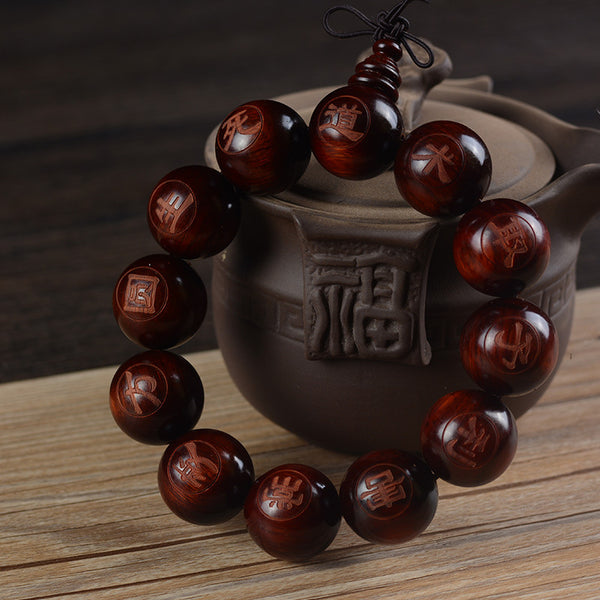
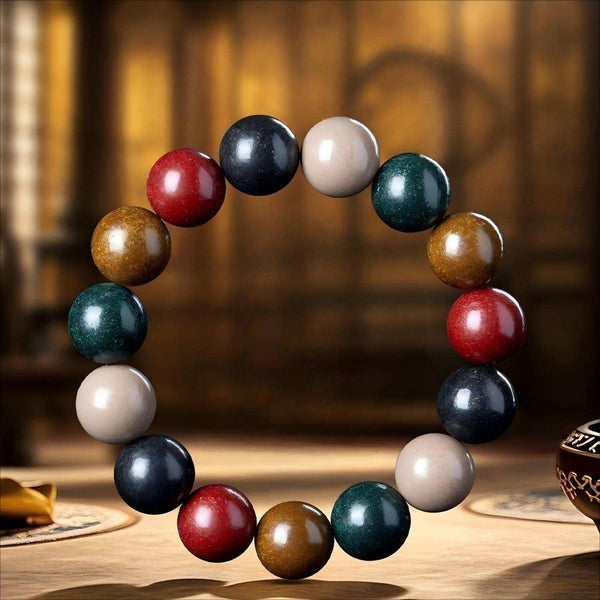
Meditation jewelry can be made from many materials, and ordinary jewelry can use the same materials. The label does not prove natural content, ingredient formula, origin, age, sustainability, durability, skin compatibility, or handmade production. Read the exact beads, cord, elastic, metal parts, coatings, colorants, charms, and closures.
Words such as herbal, incense, sandalwood, gemstone, ancient, spiritual, or traditional need product-specific support. Do not infer a formula or history from appearance alone.
Bead Count Can Support a Practice without Guaranteeing Meaning
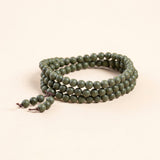
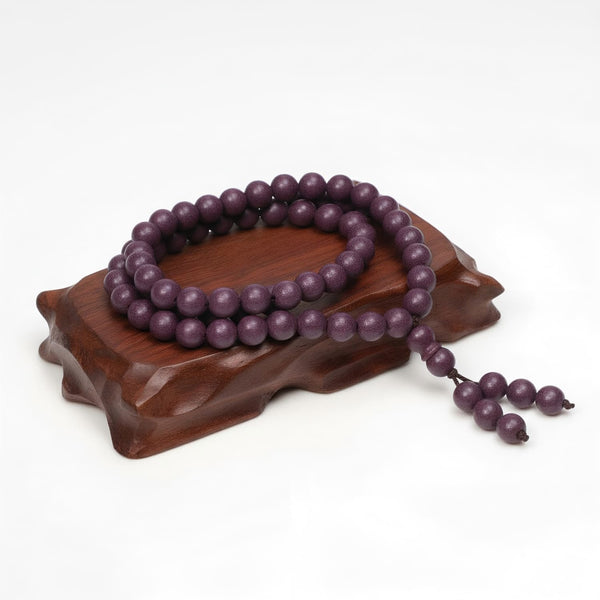
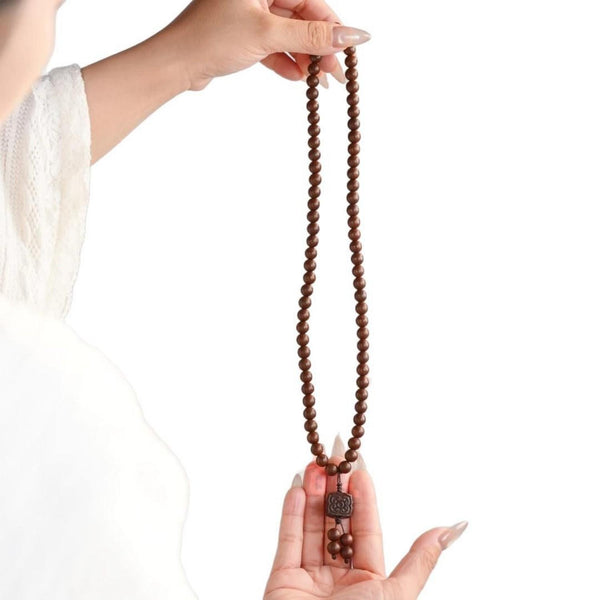
Some strands use a documented count for counting recitations or another established practice. Others use repeated beads only as design. A count should be checked against the exact variant and explained within the relevant tradition rather than given one universal meaning.
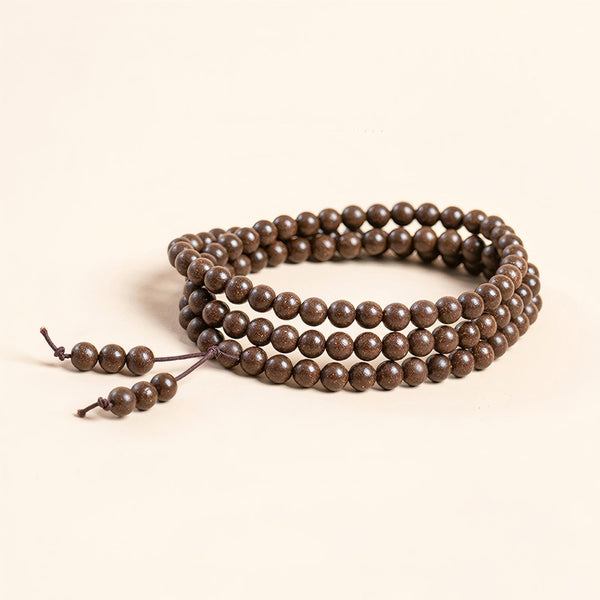
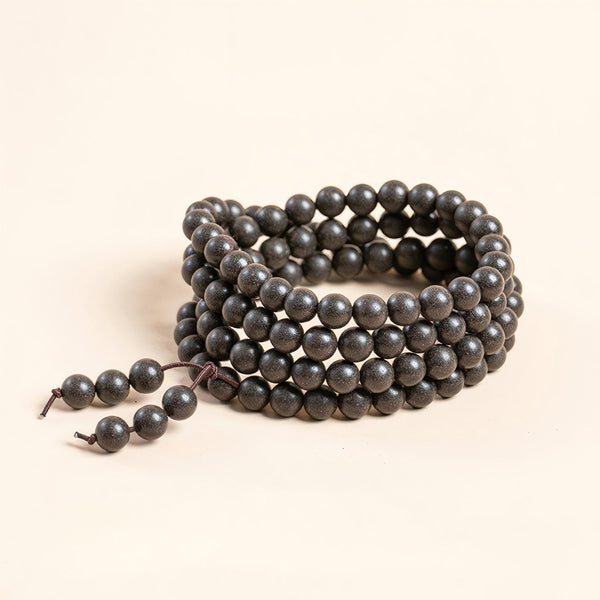
The 108 Mala Prayer Beads Guide covers the 108-bead format. A wrist bracelet with a different count should not be described as equivalent without evidence.

Fit and Wearability Still Control the Choice
A meaningful label cannot correct an uncomfortable circumference, heavy profile, rough edge, loose strand, or unsuitable closure. Measure the wrist, review bead diameter and full construction, and consider sleeves, work, water, exercise, equipment, scent-sensitive spaces, and storage.
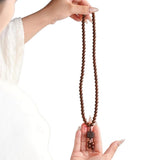
A long mala and a wrist bracelet behave differently. A necklace-length strand should not be wrapped around the wrist unless the product is designed and described for that use.
Scent Is a Product Feature, Not Meditation Proof
Some Kenlina jewelry has a scent description, but scent does not make an item therapeutic or more authentic as meditation jewelry. Perception and intensity vary. Do not add perfume, essential oil, water, heat, or steam unless the exact product instructions permit it.
Ordinary jewelry can also be scented or fragrance-free. Choose based on the listing and the wearer's preference, not the category label.
Personal Meaning Can Move in Either Direction
An ordinary bracelet can become meaningful through a gift, memory, milestone, or chosen routine. Meditation jewelry can be worn primarily for design. Neither use is invalid when claims remain honest and cultural or religious terms are treated respectfully.
Do not require a recipient to follow a practice or accept a spiritual interpretation. Meaning belongs to the wearer; product facts belong to the listing.
Check Cultural and Religious Terms in Context
Prayer beads, mala, rosary, japa, meditation, and mindful are not interchangeable labels. When a listing names a tradition or practice, look for a clear explanation of the format and avoid turning one community's use into a universal lifestyle claim. A decorative resemblance does not establish religious authority.
A buyer who plans to use jewelry within a specific tradition should consult reliable tradition-specific sources and community guidance in addition to the product page. The seller can verify the item it offers; it should not invent one required interpretation for every practitioner.
Compare the Commercial Page with the Stated Purpose
If a product is presented for counting, the page should state the relevant count and structure. If it is presented for daily wrist wear, dimensions and fit should be clear. If it is scented, the description and care should address scent without claiming treatment. The intended purpose should lead to useful facts, not replace them.
Review the selected variant, price, availability, shipping, returns, and care just as carefully as you would for ordinary jewelry. A meditation label does not reduce the need for normal consumer checks.
Compare Exact Products before Buying
Use How to Choose an Incense Bracelet and the two-bracelet comparison method. The care reminder phrases support ownership after purchase.
Compare current designs in the Natural Herbal Incense Bracelets collection. The 108-bead Herbal Incense Mala is one exact commercial example; verify its current options and product facts.
Frequently Asked Questions
Q1: Is meditation jewelry made from different materials?
A: Not necessarily. Meditation and ordinary jewelry can use the same materials; verify the exact product components.
Q2: Does meditation jewelry have to contain 108 beads?
A: No. Counts and formats vary. A 108-bead strand is one documented format, not a rule for all meditation jewelry.
Q3: Can ordinary jewelry become meaningful?
A: Yes. Meaning can come from the wearer, gift, memory, occasion, or chosen use rather than a product category.
Q4: Does meditation jewelry reduce anxiety?
A: Kenlina does not make that treatment claim. A chosen reminder is not evidence of a medical or emotional outcome.
Q5: Which category is better?
A: Neither is universally better. Compare fit, structure, materials wording, care, scent, intended use, and verified facts.