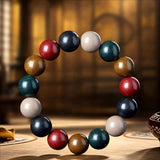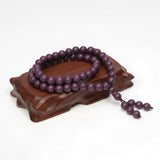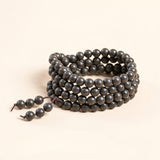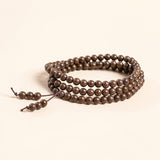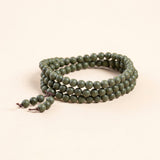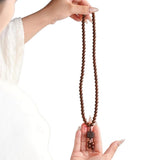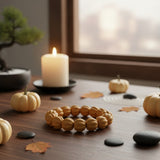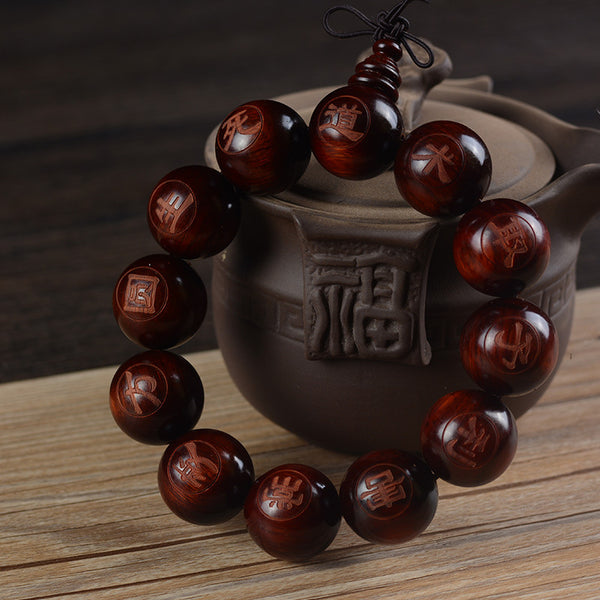
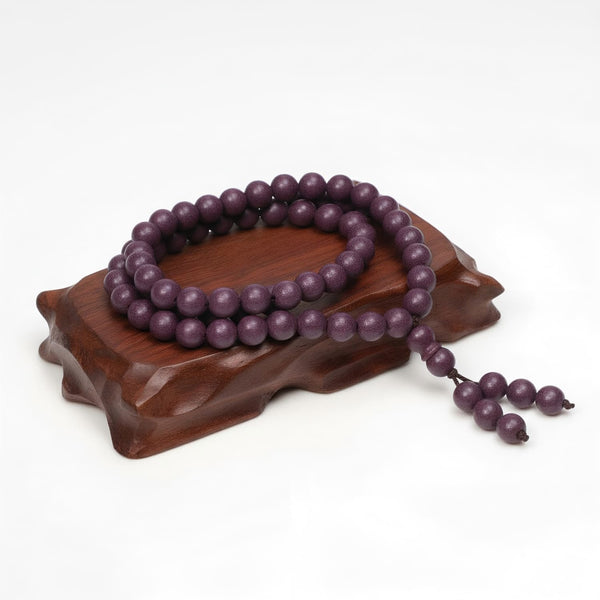

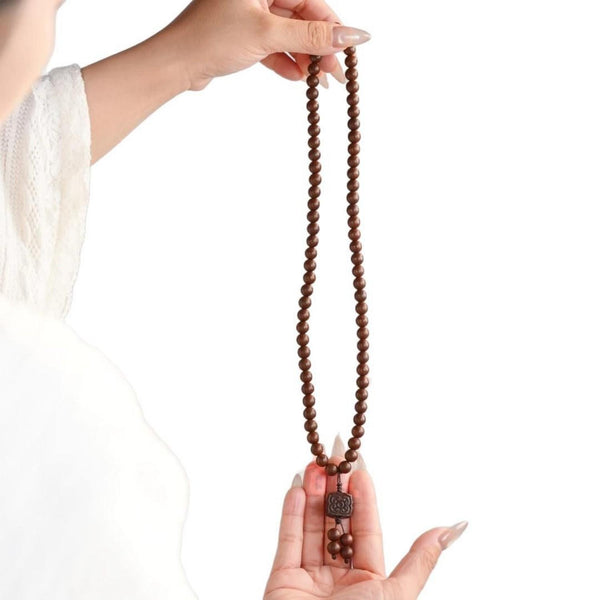

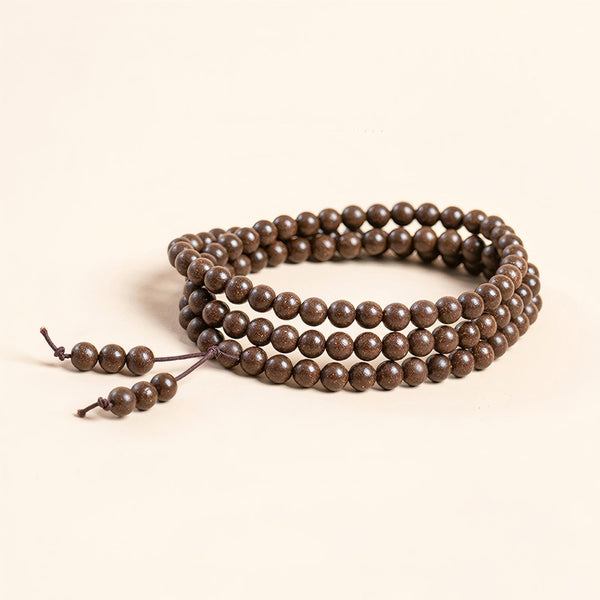
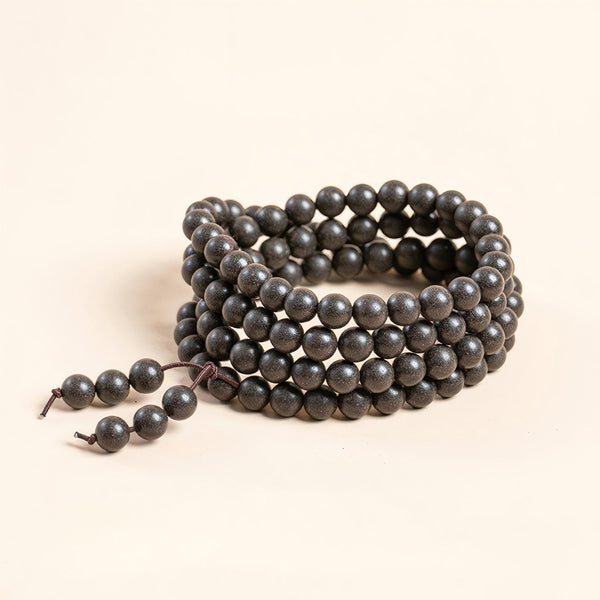
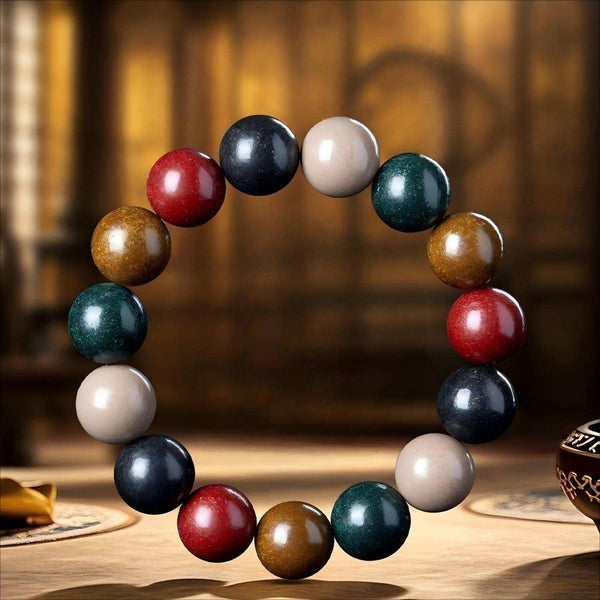
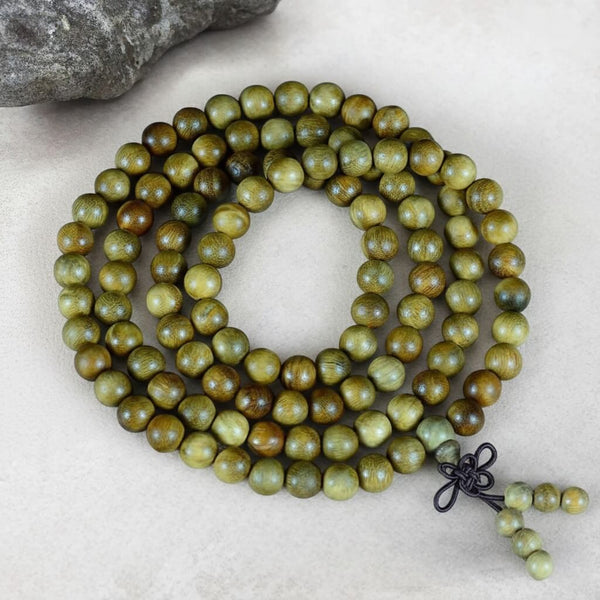
Short answer: Sandalwood beads vs herbal incense beads is mainly a choice between a wood-led bracelet and a prepared aromatic bead category. Choose sandalwood when you want visible wood grain, a restrained natural look, and product-specific wood character. Choose herbal incense beads when you want a crafted aromatic material, more batch-dependent color and scent variation, and a bracelet whose exact formula must be checked on the product page. Neither material is automatically better.
Compare the exact listing rather than relying on category assumptions. Bead size, stringing, mixed components, scent strength, finish, and care can differ from one product to another. This article does not claim medical effects, guaranteed calm, guaranteed spiritual results, a universal recipe, or one fixed historical meaning.
For the herbal category definition and fact boundaries, use the Herbal Incense Beads Pillar.

Sandalwood Beads vs Herbal Incense Beads at a Glance
| Comparison | Sandalwood beads | Herbal incense beads |
|---|---|---|
| Material identity | A wood-led bead; verify the exact wood named on the listing. | A prepared aromatic bead category; verify any stated ingredients on the listing. |
| Appearance | Wood tone and grain, with product-dependent finish. | Crafted color and surface, often with batch-dependent variation. |
| Scent expectation | Product-dependent wood character that may be subtle. | Close-wearing aromatic character that can vary and soften over time. |
| Care | Keep dry and avoid harsh cleaner, added oil, and prolonged heat. | Keep dry and avoid harsh cleaner, competing fragrance, added oil, and prolonged heat. |
| Best buying test | Check wood identity, bead size, grain, finish, fit, and construction. | Check verified materials, scent boundary, batch variation, bead size, fit, and care. |
What Are Sandalwood Beads?
Sandalwood beads are wood beads sold under a sandalwood identity. The listing should state the actual material it offers; a buyer should not infer species, origin, age, fragrance strength, authenticity, or sustainability from color alone. Product photographs can show grain and finish, but they do not replace a clear material description.
The practical appeal is visual and tactile: rounded wood forms, warm or green-toned color depending on the product, and an understated look that can sit easily beside a watch or simple clothing. Scent may be subtle and can change with handling, air exposure, and time.
For the wood-focused long-tail question, read the separate sandalwood bracelet scent and care guide. That article supports this comparison without sharing its primary keyword.
What Are Herbal Incense Beads?
Herbal incense beads are prepared aromatic beads whose exact material story can differ by product. The category name is not an ingredient list. A responsible listing states verified product facts and leaves any unknown formula, origin, or historical claim unstated.
These beads may show more visible tonal and surface variation because material preparation, drying, finishing, storage, age, and lighting can affect what a shopper sees. The article on why natural bead color and scent vary between batches explains how to separate expected variation from damage or a listing mismatch.

How Do Their Scent Expectations Differ?
Neither category should be treated as room fragrance or permanent perfume. Sandalwood may present a subtle wood character, but the exact experience depends on the stated product, finish, age, storage, and the wearer. Herbal incense beads may present a more layered aromatic character, but strength can differ by formula, batch, handling, and time.
Do not add perfume or essential oil unless the exact product instructions approve it. Added fragrance can alter the surface, color, cord, or original scent and can make a comparison meaningless.
Which Material Is Easier to Care For?
Both require dry, gentle handling. Remove either bracelet before showering, swimming, heavy exercise, cleaning, or applying product directly to the wrist. Avoid harsh jewelry cleaner, alcohol, steam, prolonged direct sun, and high heat.
Herbal incense beads also benefit from storage away from strong competing fragrance. Wood beads should not be assumed to tolerate soaking or added oil. The Bracelet Care and Materials Guide provides the shared care baseline while each product page supplies any specific exception.
Which One Fits Daily Wear Better?
Choose based on the actual routine. Sandalwood may suit a shopper who wants a quiet wood-led appearance and a straightforward material story. Herbal incense beads may suit someone who values crafted variation and a close aromatic character and accepts the need to protect the strand from water and competing fragrance.
Bead size, wrist fit, stringing, and mixed components can matter more than category name. The incense bracelet selector turns those factors into a practical buying checklist.
How to Compare Real Product Listings
- Confirm the stated material and leave unstated ingredients or species unknown.
- Check bead diameter, strand format, fit, variants, and mixed components.
- Read the scent description as a boundary, not a performance guarantee.
- Inspect close photographs for grain, surface, color family, and construction.
- Read water, storage, cleaner, and added-fragrance limits before purchase.
To compare current herbal formats, browse the Natural Herbal Incense Bracelets collection. The Ancient Herbal Incense Beads can serve as one product-specific example, but its description should not be generalized to every herbal bead formula.
Kenlina Editorial and Evidence Boundary
Kenlina uses this page to compare observable and listing-level facts. It does not infer sandalwood species, herbal ingredients, medical benefits, spiritual outcomes, historical provenance, or sustainability claims that are not documented for the specific product. When the product page and this general guide differ, the current verified product facts control.
FAQ
Q1. Are sandalwood beads the same as herbal incense beads?
A: No. Sandalwood beads are wood-led beads sold under a stated wood identity. Herbal incense beads are a prepared aromatic bead category whose exact formula must be checked on the product page.
Q2. Which type has a stronger scent?
A: There is no universal answer. Scent depends on the exact product, material, finish or formula, batch, age, storage, handling, temperature, and the wearer's perception.
Q3. Which is better for everyday wear?
A: The better choice is the one whose bead size, fit, construction, scent boundary, and care requirements match your routine. Category name alone is not enough.
Q4. Can I add essential oil to either bracelet?
A: Not unless the exact product instructions approve it. Added oil may change the surface, color, scent, or stringing. Diffuser jewelry is a separate product category.
Q5. What should I verify before buying?
A: Verify the stated material, real photos, bead size, format, fit, scent expectation, construction, care limits, and return policy. Leave any unstated ingredient, species, origin, or benefit unknown.