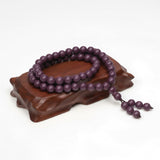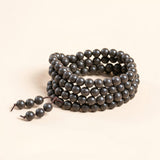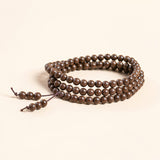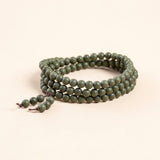


For everyday wear, there is no single wrist that every bead bracelet belongs on. Start with the side that stays out of your way during the things you do most, then measure that wrist and match it to the exact bracelet option you want. If you switch sides, check the fit again. A watch, desk edge, sleeve, or workplace rule may make a different choice more practical on another day.
Last updated: October 19, 2026.

Is there a correct wrist for everyday wear?
You may have heard that a bracelet belongs on the left or on the right. For an ordinary bead bracelet, that is not a rule everyone shares. A useful first question is simpler: which wrist gives the bracelet room during your normal day? If you write, use a mouse, carry a bag, or wear a watch, you already have clues about where jewelry might get in the way. Start there, and let the fit of the actual bracelet settle the choice.
Trying the wrist you use less often can be convenient, especially when your more-used hand rests against a desk. It is only a starting point. Someone who writes with the right hand may still move the left wrist across a keyboard, lean it against a table, or cover it with a close sleeve. Another person may prefer the right wrist because a watch already occupies the left. The best side can change between work, a walk, and an evening out.
If your workplace asks you to remove jewelry, follow that rule. If both sides feel inconvenient during a particular task, setting the bracelet aside is a perfectly reasonable choice. You are choosing how to wear an accessory, not committing to one wrist forever.
Choose a side from what you actually do
Use this table as a starting point, then check your own movements. The suggested side is an option to try, not a promise that it will fit or feel best.
| Your situation | A side to try first | What to check |
|---|---|---|
| You wear a watch on one wrist. | The wrist without the watch. | Whether the bracelet sits comfortably beside your sleeve and stays out of the way. |
| A bracelet on your more-used hand meets a desk edge. | The other wrist. | Whether that wrist also touches the desk during your usual movements. |
| You may wear it on either wrist. | Either side, after measuring both. | Whether the selected size suits the wrist you actually use that day. |
| Neither side works for a particular activity. | Set the bracelet aside for that activity. | Try it again when it will not interfere. |
The same person can use different rows in one day. A bracelet that stays clear during a walk might meet the edge of a dinner table. The table gives you a situation to test, not a permanent assignment to one wrist.

What if you already wear a watch or another bracelet?
A watch makes the other wrist an obvious first try, but you may like the look of a watch and bracelet together. If you stack them, notice whether the bracelet slides under the watch or its clasp, and whether both pieces have room beneath your usual cuff. The result depends on the two items you actually wear and how they move on your arm.
If you wear a watch only on some days, you can keep the bracelet on one wrist or change sides with your outfit. A short sleeve, a close cuff, and a second bracelet create different amounts of space around the same wrist. Judge the combination you would actually wear, rather than an empty wrist in isolation.
A simple two-wrist check before you settle on a side
If you already own a bracelet, compare the two sides under the same ordinary conditions. Keep the watch, sleeve, and activity consistent so you can notice what changes when only the wrist changes. If you are still shopping, the same questions can help you choose which wrist to measure first; they cannot predict the feel of an item you have not tried.
- Start with your usual setup. Put on the watch or sleeve you commonly wear. Notice which wrist has more room and which one meets a desk, bag strap, or cuff during the day.
- Try the bracelet during normal movement. Sit, stand, reach for an everyday item, and rest your hands where you usually work. Notice contact or pinching without deliberately pulling or stretching the bracelet.
- Switch sides and repeat. Use the same watch, sleeve, and ordinary movements. A different result may come from the task or clothing as much as from the bracelet itself.
- Choose for the activity. If one side stays clearer and feels comfortable, use that side. If neither works for the task, set the bracelet aside until the activity changes.
This short comparison can reveal a contact point you did not notice when standing still. It is a check of your own routine with a bracelet you have, not a Kenlina product trial or a substitute for the listed fit details of a bracelet you plan to buy.
Measure the wrist you intend to use
Once you have a likely side, measure that wrist at the position where the bracelet will sit. Kenlina's wrist-measurement guide explains the tape or paper method. The side you intend to wear is the side whose measurement matters for this decision.
If you are considering both sides, measure each separately at its intended wearing position. Write down which number belongs to which wrist. Even if the numbers are close, do not silently reuse a size chosen for the other side. A small difference may place the two measurements in different listed ranges, and the way a bracelet meets a watch or sleeve can also change how it feels.
Compare your measurement with the range stated for the product option you select. If the listing does not give enough fit detail, email help@kenlina.com with the product name, chosen option, and the wrist you measured before ordering.

What if your left and right measurements differ?
Consider a fictional sizing example, unrelated to the two Kenlina products below: a left wrist measures 15.8 cm and a right wrist measures 16.4 cm. An imaginary listing offers 15–16 cm and 16–17.5 cm bands. The two measurements point to different bands, even though the wrists are only 0.6 cm apart. These invented bands are not Kenlina's current option labels, and the arithmetic does not tell you how either bracelet would feel.
If you expect to alternate between wrists that fall in different bands, decide which side is the primary one before ordering. A photograph or bead count cannot settle whether a single option will suit both. You can ask Kenlina about the exact option if its fit details leave that question open, then try the piece on each wrist when it arrives.
How do Kenlina's current options help you choose?
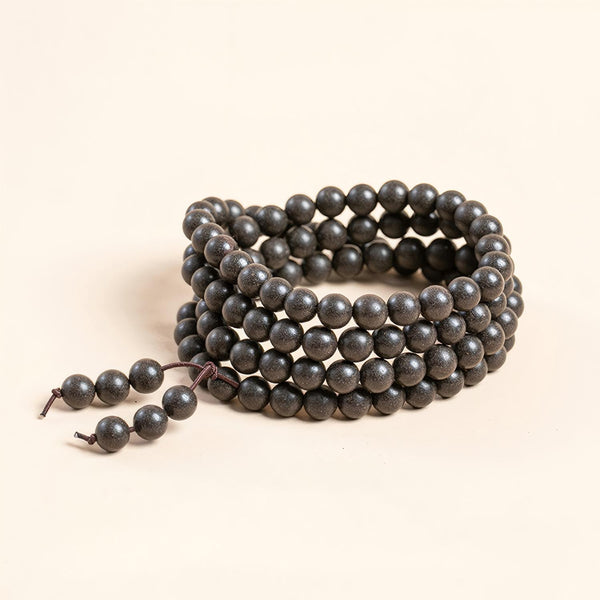
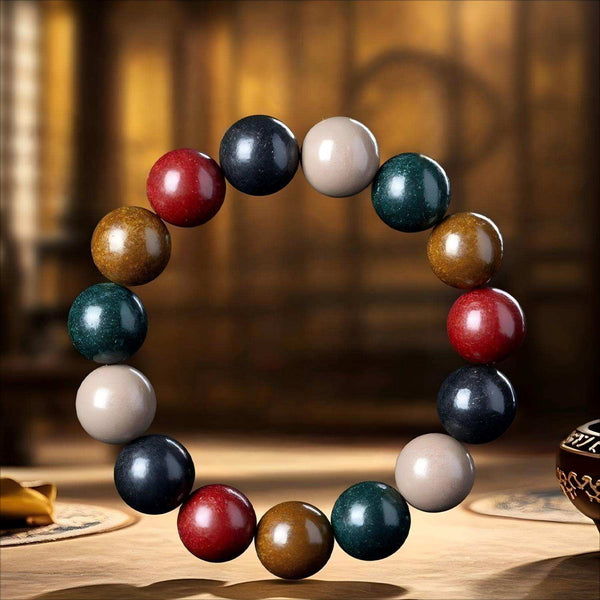
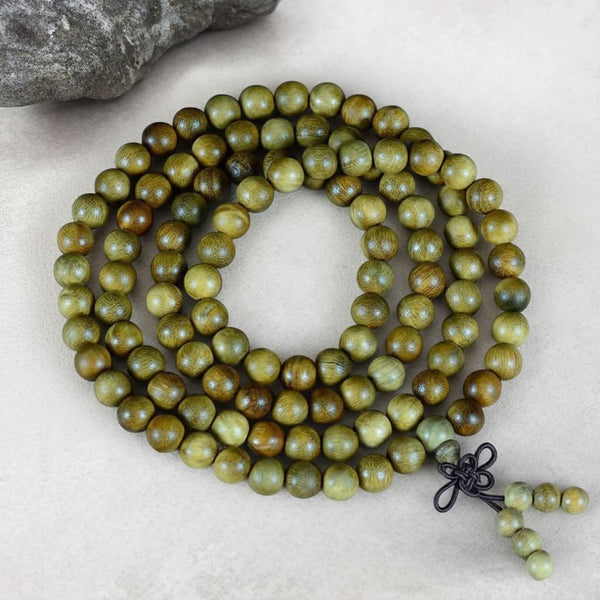
The Green Sandalwood Beaded Bracelet and Five Elements Herbal Incense Bracelet both offer wrist-range choices. When checked on October 19, 2026, each page displayed ranges starting at 14–15 cm and ending at 18–20 cm. The relevant number is the measurement of the wrist on which you intend to wear the selected design.
Choose the design and range you want on the current product page and confirm that exact combination before checkout. Availability can change. These two products are shopping examples for a side you have already chosen; their names do not prescribe a left or right wrist.
What if you want to change wrists later?
Your weekday and weekend habits may put a watch, cuff, or work surface in different places. If you want one bracelet to move between wrists, keep each wrist's measurement with your purchase notes. When the bracelet is in hand, make the change during a low-demand moment and notice where it rests; a size selected for your usual side may feel different on the other.
You might prefer one side for most days and reserve the other for particular clothes or occasions. That is easier to remember than a blanket rule such as “always left.” If a switch causes pinching or repeated contact with a surface, return to your usual side or take the bracelet off for that activity. A change of wrist is an option, not a test you have to pass.
Does a tradition decide left or right?
Some people follow a practice that gives meaning to a particular side. If that is part of your own practice, use guidance from that practice. Kenlina does not have a store-wide left-or-right rule for ordinary bead bracelet wear, and different traditions should not be flattened into one instruction. A side choice by itself does not promise a change in mood, health, energy, or fortune.
If your practice calls for one side but a task makes jewelry inconvenient there, you can set the bracelet aside for that task. You do not need to turn a practical adjustment into a claim about the practice itself. Personal meaning can guide your choice while the physical item still needs to work with your clothes and movements.
A short path from question to choice
There is no universal winner between left and right for everyday bead bracelet wear. The useful answer is the one that fits both the wrist and the situation in which you will wear it.
Use Find Your Fit to compare current wrist options, then confirm the exact design and range on its product page.